🎬 Newest classes & lessons

Open Session: Reed Strength, Performance Tempo and Steady DronesAn open session on your questions: making a chanter reed easier or harder with a rubber band and a poker, picking a performance tempo you can hold together, drones that skip the first tone, and why I tune on high A.
→
The Blowing Secret: The 80/20 Rule for Steady BlowingMy free class on steady blowing: why steady bag pressure matters, your arm as a constant weight, how hard to blow, and the 80/20 Rule I found by timing the world's best pipers, with a practice plan on the Piper's Metronome.
→
Kenny G, Sir Mix-a-Lot, and Me: How Did This Happen?A friend texted me a photo of myself on a wall next to Kenny G and Sir Mix-a-Lot. I was sure it was AI, so I went to see it: a hand-painted black-light mural at a mini golf course near Seattle, with bagpipes made of bones.
→
Learn Faster, Perform BetterMy book class on Molly Gebrian's Learn Faster, Perform Better, applied to the pipes: start with your hard spots and overlearn, use errors on purpose, take short breaks, mix up your practice, sleep on it, practice in your head, and memorize so it holds.
→
Drones That Lock InMy free class on drones: stability first, how a drone reed works and its four levels, the bridle, matching your drone reeds to your chanter reed with the Bagpipe Gauge and Reed Tester, where your drones should sit, the tuning screw, and tuning to low A with the InTune Mic or by ear.
→
Don't Start Learning to Play the Bagpipes Until You Watch ThisThe top 10 questions from people curious about the pipes: what you need to start, which practice chanter, learning on your own, the $100 set online, how long it takes, am I too old, a teacher, sheet music, what practice looks like, and joining a pipe band.
→
Practice Chanter Session — October 20, 2026An open session on embellishments: the taorluath and its theme notes, the rodin as a grip turned inside out, double E and the perfect doubling, F doublings and tension, even jigs on smallpipes, and practicing on the pipes.
→
The Practice Playbook: How to Actually Get BetterMy practice playbook: take a skills inventory, record a baseline and write down your commitment; then the five tools (play your pipes more, break tunes into drills, focus on form, use the right tool, ask yourself the questions), technique, timing and tempo in that order, and giving yourself credit for the work.
→
Your Pipes Should Be Easy to Play, Part 2: The ReedPart 2 of my free class series: the chanter reed. Strength is a number, around 30 inches of water on the Bagpipe Gauge; moisture first, then the blow test; the sweet spot between the choke and the chirp; the orthodontic elastic, the reed poker, and keeping a good reed playing well with the Tone Protector.
→
What Bagpipes Should I Buy? Four Sets Compared, and What's Worth Your MoneyFour sets from plain to most decorated: the R.G. Hardie Poly, the Peter Henderson PH01, PH02 and Heritage Viking. The red flags on eBay and Amazon, what quality looks like in the hardware, the bores and the sound, new or used, what sticks only means, and the Sticks Only, Basic and Premium packages.
→
Master Your Timing: The Most Important & Trickiest Rhythms in Piping
→Master Your Timing: The Most Important & Trickiest Rhythms in PipingThe trickiest rhythms in piping are the ones where the cut note comes first and a short note lands on the beat. Major John McLennan, The Battle of the Somme, Black Bear, King George V's Army and Mrs. MacPherson of Inveran, the most butchered rhythm in piping, how to stop rushing the short beat note, and pulsing on the Piper's Metronome.
→
Light & Fast Hands: How to Get Unstuck From Playing SlowClean but slow, or fast but falling apart? The limit is tension, not talent. Hand position top and bottom, the thumb between the middle and ring fingers, a 2-out-of-10 squeeze, fingers that hinge at the knuckle, and three ways to build speed: inch the metronome up, Willie McCallum's three speeds, and interval speed training.
→
How to Play Clean & FastClean at this tempo, or fast and falling apart? What holds most pipers back is not effort or practice time — it is technique. Light hands (a 2 out of 10 squeeze), fingers an inch off the chanter, where each hand goes, tiny gracenotes, and raising the metronome one click at a time.
→
Your Pipes Should Be Easy for YouIs it you or is it your pipes? The three causes of a hard bagpipe — a chanter reed that is too strong, air escaping somewhere, or an instrument that does not fit you — and how to fix each one with the gauge, the rubber-band method, the two-tone drone reed test, the right bag size, and good posture.
→
Practice Chanter Session — September 21, 2026Highlight your tunes by rhythmic pattern instead of by phrase — the Duke of Roxburgh and the High Road to Gairloch colored live — plus crossing noises (raise, then drop), why 16th notes don't exist in pipe music, and learning piobaireachd by ear first.
→
Mystery Session: An Introduction to the New Lesson LibraryA full tour of the new Inner Circle Lesson Library: every video transcribed and searchable, courses and topic guides, all 74 tune lesson downloads included, and what to email me when something breaks.
→
Back to School: Structured Practice for Technique and TimingA back-to-school method for practicing: break the tune down to the one movement that's failing, drill it with the technique, rhythm and speed stripped out, and bring them back one at a time.
→
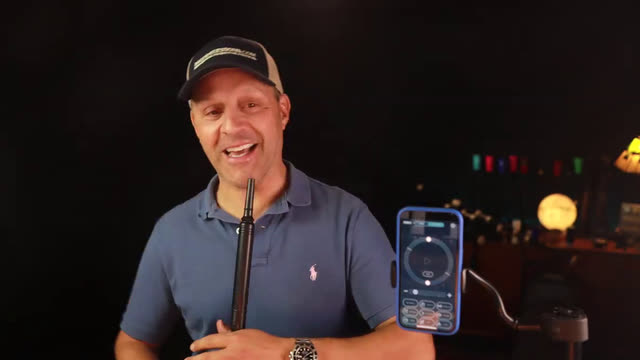
Why Your Practice Chanter Sounds Bad: A Guide to the Top 4 Practice Chanter Reeds For Every PiperMost pipers spend more time on the practice chanter than on their actual bagpipes, yet the reed inside it gets almost no attention.
→
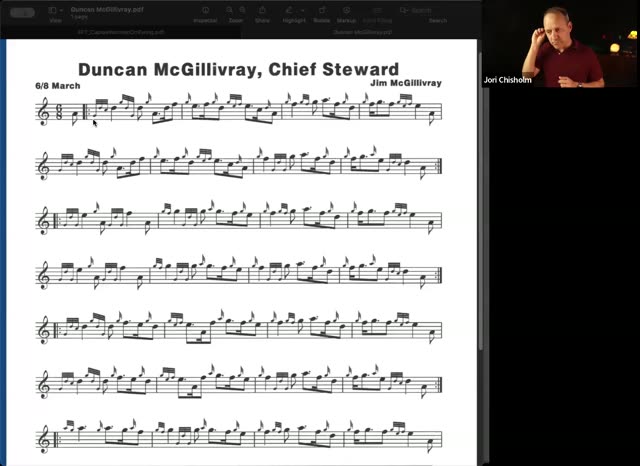
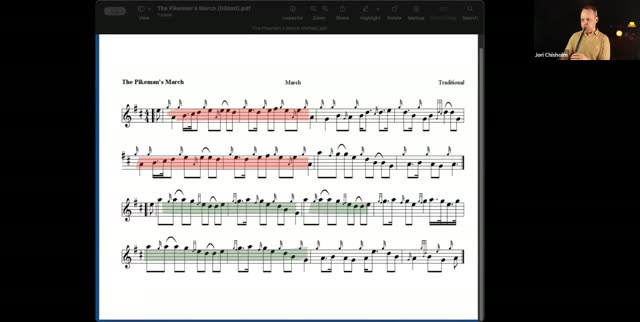
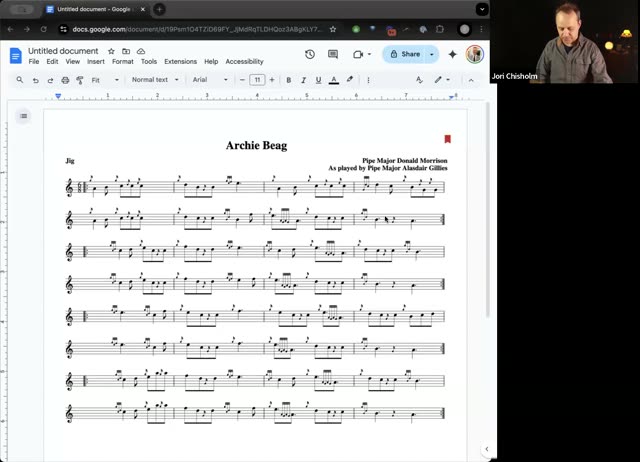
Classic Two-Parted 6/8 MarchesFive classic two-parted 6/8 marches — and the four rhythms that every one of them is built from, plus how to stop rushing the cut-first beats.
→
These Drone Reeds Take Almost No Air (And Still Don't Shut Off)I put a set of Selbie drone reeds through a hands-on demonstration to show why they've become known for being plug-and-play.
→
Tuning Your Pipe Chanter: Adjusting the Reed and Using TapeThis session is a live, end-to-end demonstration of how I take a brand-new chanter reed from the box to fully tuned bagpipes.
→
Practice Chanter Session — July 30, 2026A small but lively practice chanter session: A member reports progress on bellows pipes, another member — six months into the full pipes — describes notes cutti
→
Making the Jump from Practice Chanter to PipesThis session tackles the single biggest transition in a piper's journey: moving from the practice chanter to the full bagpipe.
→
What is a Tone Protector? The Complete Tone Protector Lineup: Every Product ExplainedEvery piper knows the feeling of not being sure what they're going to get when they pull out their pipes: some days the reed feels great, other days it's stiff,
→
Open Session! Bring Your Tunes, Topics, Questions, and IdeasThis Member's Choice open session runs entirely on member questions, and the first one launches a half-hour tour of the most beautiful slow airs on the bagpipes
→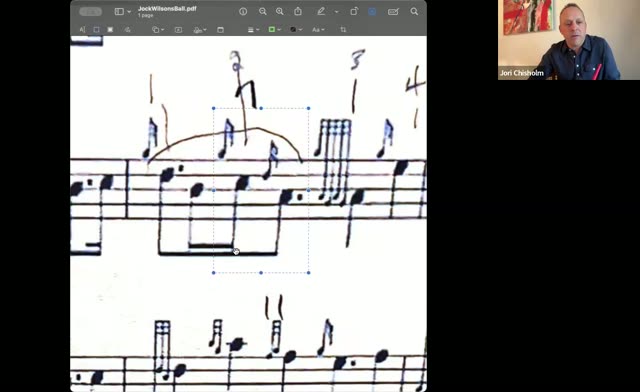
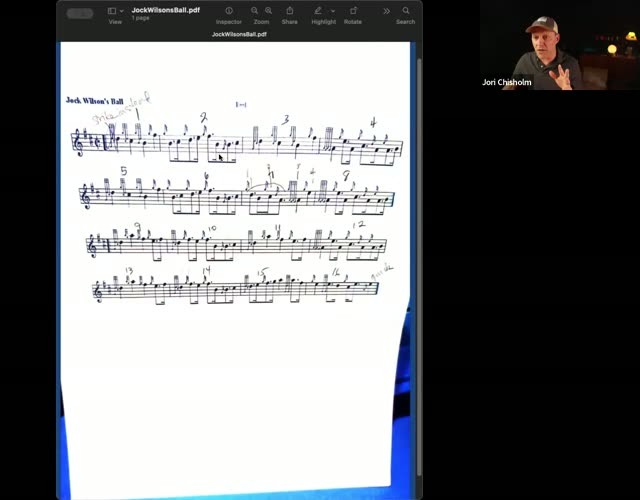
Practice Chanter Session — June 29, 2026This session is built around member questions on Jock Wilson's Ball, a classic reel.
→
Pointing, Pulsing & Phrasing: A Guide to Bagpipe ExpressionPointing, pulsing, phrasing — pipers hear these words on judges' sheets and in lessons, but what do they actually mean?
→
Competing for the First Time: Everything You Need to KnowI open by going around the room: members share competition histories ranging from grade 4 solos to the Worlds with SFU in 1999, and one member describes the pre
→
Strategic Micro-Practice: How Tiny, Targeted Sessions Build Extraordinary SkillHow tiny, targeted practice sessions build extraordinary skill.
→
Classic Strathspeys Every Piper Should Know: A Survey of the BestA survey of the classic strathspeys every piper should know.
→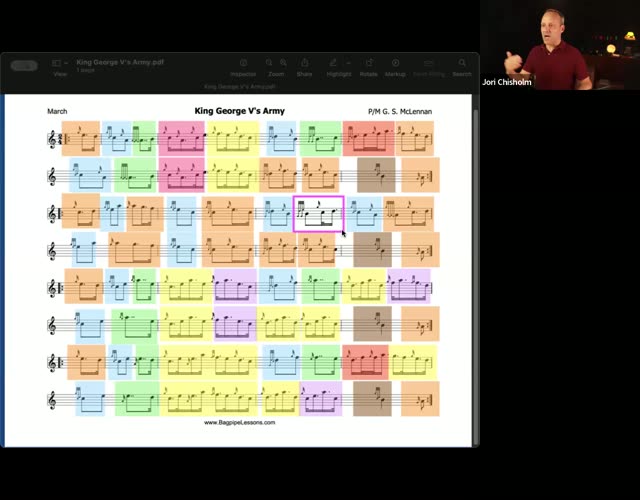
Practice Chanter Session — May 28, 2026Replay of the May 2026 practice chanter session — play along and tighten your technique.
→
Set Up Your Bagpipes Fast with the New Precision Reed Tester & Drone Adapter from BagpipeLessons.comEvery piper has faced pipes that just don't feel right without knowing why.
→
The Secret Blowing Technique Used By Top Pipers: The 80/20 Rule RevealedI share a discovery I've never taught publicly before: a specific, measurable blowing pattern shared by the world's best pipers.
→
Conquering Performance Anxiety: Mental Strategies for Confident PlayingMy Conquering Performance Anxiety guide, as a printable PDF.
→
Your Pipes Will Never Stay In Tune Until You Fix This One Thing: It Is More Than Just Steady BlowingIn part one of a two-part series, I break down what steady blowing actually is, why it's one of the hardest skills in piping to master, and the tool I built to
→
Listening Like a Judge: How to Hear Piping Like an ExpertThis one came out of a question I get all the time: what are judges actually listening for?
→
The Truth About Pipe Bags: Pros and Cons of Sheepskin, Synthetic, or Hybrid BagsPipe bags are one of the most debated topics in piping, and I walk through the three main types up close: traditional hide bags (usually sheepskin), modern synt
→